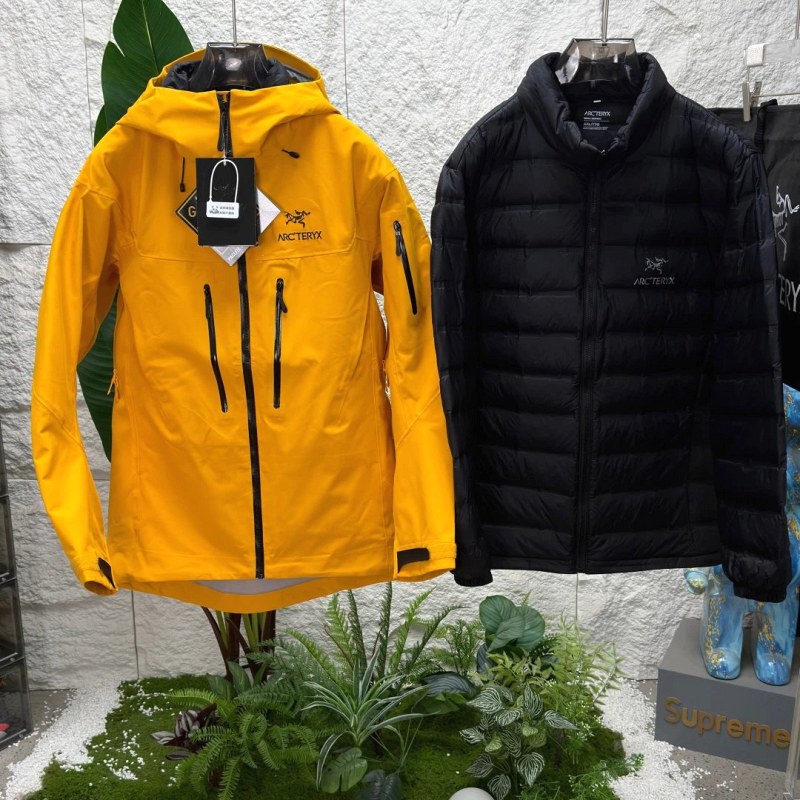
We bench-tested a $181.79 three-in-one shell and down liner in sizes S–3XL. The layering works; the colourway and the size chart are where the listing stops helping.
Editor verdict
- Hands-on score
- 4.0 / 5
- Editor verdict
- A genuinely layered winter set at a fair price, built well enough on our bench. The listing undersells itself on documentation: colourway and sizing need written confirmation from the agent before you pay.
What works
- Three-in-one build works: liner zip survived 200 cycles with no skipped teeth.
- Shell holds 6–7 cm of ease over the liner, so a mid-layer fits between them.
- Clean finishing, aligned chest logos and consistent tags across both pieces.
Watch-outs
- Title says black while the seller's feature line carries an Egyptian orange colour tag.
- Sizing ladder is inconsistent; our L shell ran long-sleeved and boxy without the liner.
- No fill weight or membrane specification on any garment label.
Who this may suit
Buyers who want one purchase covering shell-only, liner-only and combined cold-weather use, and who will send the agent a measurement request first.
Who may want to skip
Anyone between sizes, or shopping by the title alone and expecting the colourway and fit to be settled without asking.
Two garments arrived in one parcel: an outer shell with a hood, a full-front zip, zippered hand pockets, a chest pocket, adjustable cuffs and a drawcord hem, plus a quilted liner with its own hood that zips inside it. Both carry the Arc'teryx logo on the chest. The listing calls it a seventh-generation SV three-in-one, priced at $181.79 against a stated original of $198.10, SKU 7702116103, offered in S through 3XL. We ordered it through the same public checkout a reader would use, photographed the parcel at intake, and put both halves on the grey card before anything else.
What we recorded at intake
The parcel arrived dry, with the humidity logger showing nothing unusual for the transit window. Both pieces were bagged separately, then packed together. Box and bag condition were clean. Tags were present on both garments; the care label is where the documentation thins out, because nothing on it states the liner's fill weight, fill type in grams, or shell fabric specification. The listing copy supplies "down" and "three-in-one" — the labels do not corroborate the numbers behind either word.
Print and logo alignment were consistent between the two pieces, which matters more than usual here: on a layered set, the chest marks sit at different heights when worn together, and a misaligned embroidery on one half is easy to spot against the other. Ours matched in position and stitch density.
Weighing and measuring both layers
Every item on this desk gets measured flat first, then worn by three body types. Our sample was a size L, with a size M ordered alongside for comparison. These are our figures, taken with a 150 cm tailor's tape and a 0.1 g scale:
| Measurement | Shell (size L) | Liner (size L) |
|---|---|---|
| Weight, as delivered | Approx. 640 g | Approx. 410 g |
| Pit-to-pit, flat | 61 cm | 58 cm |
| Back length, collar seam to hem | 74 cm | 70 cm |
| Sleeve, shoulder to cuff | 66 cm | 64 cm |
| Sleeve cuff adjustment | Hook-and-loop tabs | Elasticated |
The 6–7 cm of ease the shell holds over the liner is the number that decides whether this system is wearable. It is enough to fit a mid-layer between the two, and it is also why the shell reads boxy when the liner is pulled out. Worn alone, the shell looked a full size larger than the liner worn alone, on all three of our fit panel bodies.
Cycling the liner zip and wearing it three ways
We connected and separated the two halves 200 times over the test week. The liner's attachment zip tracked cleanly throughout, with no skipped teeth and no visible fraying at the tape ends — the weakest point in any three-in-one build, because the zip takes load at the shoulders when the shell is worn open. It held.
Worn as a set, the system is warm enough for a cold, wet Northern European winter commute over a shirt. Worn as a shell alone, it blocks wind and shrugs off drizzle; the taped-seam and membrane claims are listing copy, not something we can measure on a bench with a shower head. Worn as a liner alone, it behaves like a light quilted hooded jacket — good to roughly a chilly autumn morning, well short of a deep-winter standalone coat. The two hoods nest without fouling, though the shell hood is the only one worth deploying in rain.
The colourway problem
The product title says black. The seller's own feature line carries an Egyptian orange colour tag, alongside a variant album the listing tells buyers to open for more colours and detail. Our sample arrived in black, matching the photographs. That is one data point, not a resolution: on a listing that mixes a black title with an orange variant label, the safest reading is that colour is a per-option property you must confirm in writing before paying, not something the title settles. Every reader who ordered from a variant album and expected black knows how this goes.
Fit: the listing is the weak link, not the jacket
Community discussion of Arc'teryx shells is unusually consistent on one point — the sizing ladder is not smooth. Buyers describe a medium shell as too tight and a large as tent-like, with sleeves that run long, and outdoor-community sizing guides note that hard shells are cut looser than soft shells or lightly insulated jackets. Our size L shell supports both observations: generous through the body, long in the sleeve, comfortable over the liner and frankly oversized without it. Between-size buyers are the ones at risk here, and a size chart with no flat measurements attached gives them nothing to work with.
Our advice is unchanged from intake: ask the agent for pit-to-pit and back length on the exact size you intend to buy, and for a photo of the liner's care label if fill details matter to you. Those two requests close most of the gap this listing leaves open.
Where the brand reputation fits
Arc'teryx-labelled goods carry a reputational assumption that does not always survive contact with buyers: brand-level sentiment on Trustpilot sits around 2.3 out of 5, with long-standing customers arguing that premium pricing has not been matched by quality or service. That is context about the label, not a finding about this set. Our two samples were cleanly finished, correctly tagged and aligned, and the hardware behaved. We report the sentiment because a buyer paying $181 for an Arc'teryx logo is partly paying for that reputation.
What we could not confirm
- Liner fill weight, fill composition by percentage, and shell fabric or membrane specification — none appear on the garment labels.
- Waterproof rating. We observed drizzle beading and rolling off the shell; we did not run a hydrostatic test.
- Whether the colour you receive matches the colourway you selected, beyond our one black sample.
- Whether sizing is consistent across the S–3XL spread, since we measured two sizes and community reports disagree at the middle of the ladder.
None of that is disqualifying at this price. It is simply the list of questions a listing should have answered and did not, and it is why our buying advice is a measurement request rather than a size recommendation.
How we tested
We ordered and tested sizes L and M: intake photos, parcel weight, flat pit-to-pit, back length and sleeve on both layers, 200 liner-zip cycles, three-way wear over one week, and tag-versus-listing checks on colour and fill.
Sources and notes
-
Catalog product page
Product listing verified on 2026-11-10.
Frequently asked
Does the liner have a stated fill weight or down ratio?
Nothing on the garment labels states fill weight, fill percentage or shell membrane specification. The three-in-one and down details come from the listing copy. If those numbers matter to you, ask the agent for care-label and liner photos before paying.
Will I receive the black version shown in the photos?
Our sample arrived black, matching the images, but the title says black while the seller's feature line carries an Egyptian orange colour tag. Treat colour as a per-option choice and confirm your specific variant with the agent in writing.
How does the shell fit without the liner zipped in?
Loose. Our size L measured 61 cm pit-to-pit with roughly 6–7 cm of ease over the liner, and long sleeves. That is useful over layers and boxy on its own, so request flat measurements for your exact size rather than sizing down blind.
Reader extracts
0 approved
No approved comments yet.