Start with the Overall Color Palette The core of this setup is a pair of white low-top sneakers. The upper, laces, tongue, and sole all share the same color, creating a clean and unified look; the curved overlay panels on the sides, even stitching, and a few perforations keep the large white areas from feeling monotonous. A red rectangular logo near the heel becomes the only eye-catching warm accent, perfect as a small-area visual focal point in an outfit. 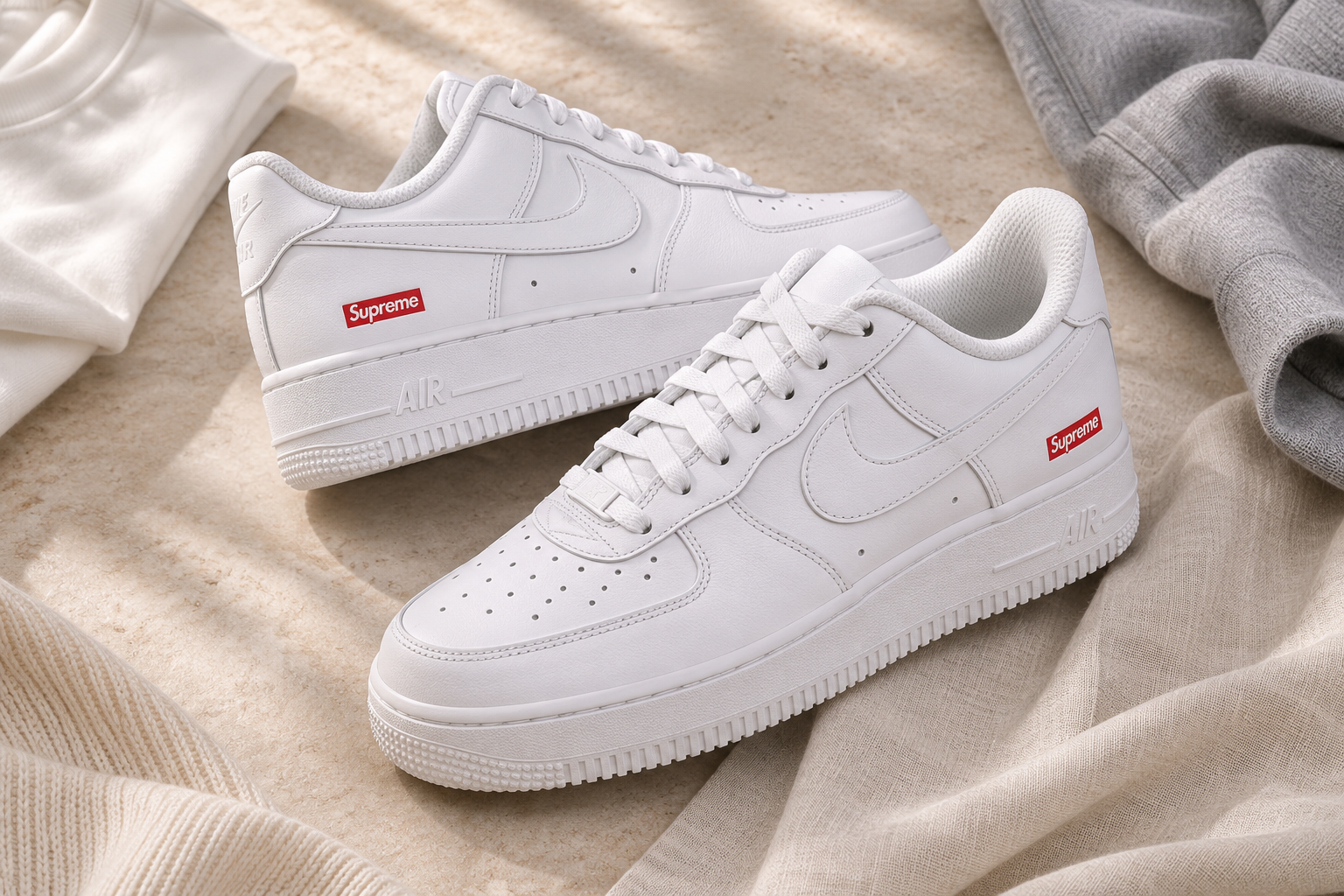
Start with the Overall Color Palette
The core of this setup is a pair of white low-top sneakers. The upper, laces, tongue, and sole all share the same color, creating a clean and unified look; the curved overlay panels on the sides, even stitching, and a few perforations keep the large white areas from feeling monotonous. A red rectangular logo near the heel becomes the only eye-catching warm accent, perfect as a small-area visual focal point in an outfit.

Colorway Pairing Suggestions
White sneakers work well with low-saturation clothing, maintaining the soft atmosphere of the look. Beige, light gray, and oatmeal can serve as the main garment colors—they won't steal the clean feel of the upper and will help create natural layering. To echo the red logo at the heel, add a small touch of red in socks, a hat, or a small bag, but avoid using multiple high-saturation colors at once.
Consider these combinations first:
- White top with light gray trousers, highlighting the unity of the upper and sole.
- Beige knit sweater with white or light khaki pants, creating a warm, neutral backdrop.
- Gray jacket with dark straight-leg pants, letting the white sneakers be the bright area in the outfit.
- Red only as a small accessory or detail, tying back to the heel logo.
Clothing Layers and Material Relationships
The white sneakers in this image have relatively clean lines, so they pair well with simply cut clothing. For tops, choose soft knits, cotton sweatshirts, or plain basic shirts to add depth through texture. For bottoms, straight-leg, slightly relaxed, or gently draped silhouettes work best—avoid excessive stacking at the hem so the perforations, side details, and sole structure remain visible.
If the overall outfit is loose, keep a clear boundary where the pants meet the top of the shoe; if you opt for slim-fit pants, balance the proportions with an oversized top or a lightweight layer. The white sole is quite prominent, so avoid busy patterns near the hem, which can detract from the shoe's silhouette.
How to Arrange the Display
When placing two shoes side by side, offset one slightly forward or to the side so the upper, side, and sole are all visible at once. In this image, the staggered positioning shows the laces, tongue, curved side panel, and outsole tread, making it ideal for examining overall proportions and detail distribution.
For the background, choose beige, light gray, or light brown, and add soft knits, cotton tops, or lightweight fabrics. The background shouldn't be brighter than the white upper, and avoid too many strong textures. To emphasize the red logo, keep surrounding clothing neutral and confine the red to a small area.
The centimeter ruler at the bottom and left helps gauge the approximate placement ratio between the shoes and background objects. It's for composition reference only—don't use it to infer actual sizing or specifications.
Key Points When Inspecting Details
From the image, you can clearly see that the upper stays white overall, with a distinct contour between the curved side panel and the main body; the stitching is evenly spaced, the toe area has uniform perforations, and the sidewall and tread pattern are easy to identify. When styling, build outfits around these clean lines and avoid covering them so the shoe's structure remains the visual focus.
This image is only for observing appearance, colorways, and display relationships. It cannot be used to judge comfort, actual size, material composition, durability, performance, or brand authenticity. For purchase decisions, always review specific specifications, sizing information, and product details from multiple angles.
Reader extracts
0 approved
No approved comments yet.